News
10/30/2026
New Darkroom, New Teacher: A Fresh Focus for Poly Photography Students
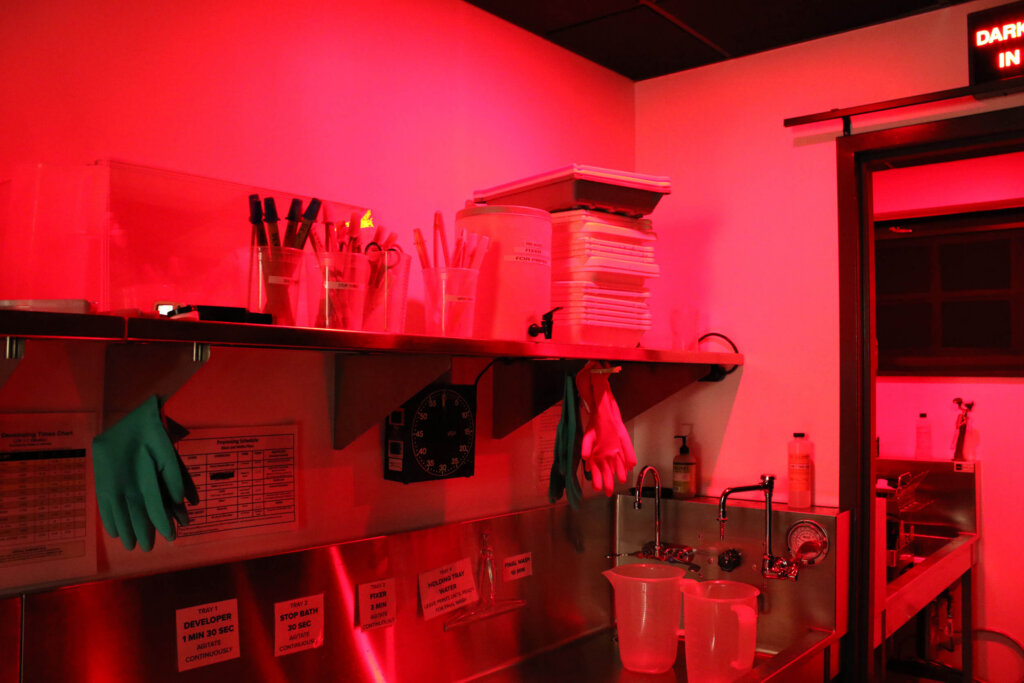
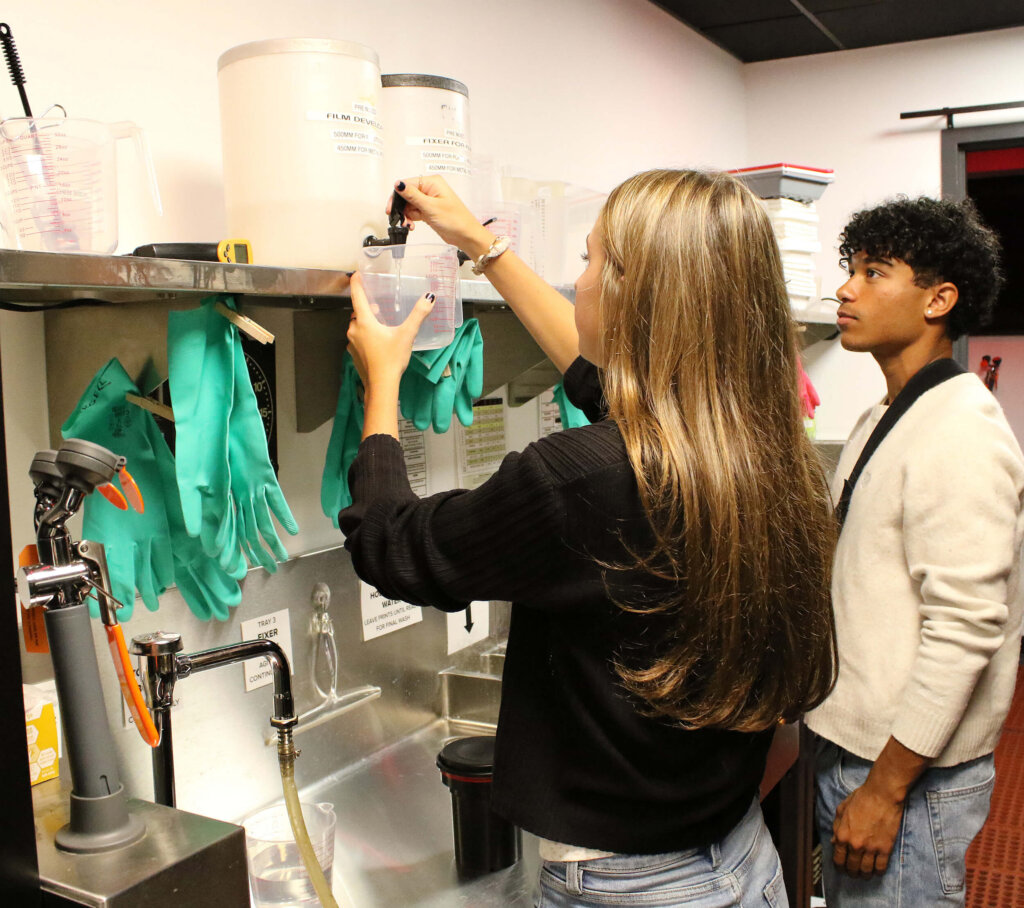
On a recent Wednesday morning, the old band room smelled faintly of vinegar. Behind a heavy black curtain, a group of juniors and seniors stood in the glow of red light bulbs, watching a ghostly image emerge on a blank sheet of paper. For many of them, it was the first time they had ever seen a photograph appear this way: not on a screen but slowly, in a tray of liquid, one shadow at a time.
The Marrus Family Darkroom, which opened this fall in honor of David Elias Marrus ’48, is the newest addition to Poly Prep’s visual art facilities, and its arrival coincides with that of a new Upper School photography teacher, Alexis Lambrou. Alexis is eager to show students that there is more to the craft than a phone camera and a filter. In a generation raised on instant images, she says, that slow reveal is exactly the point.
“To be able to give students the experience of working with analog photography, and how hands-on the whole process is, will make them think about photography in a very different way,” said Alexis. “What it took to get one picture, versus how easy it is to just snap it on your iPhone today. They’re getting a fully analog experience. They’re learning the magic, experimentation, and unpredictability of film!”
The Lasting Lure of the Darkroom
Alexis learned that magic firsthand at a young age, taking photography in high school. She went on to study photojournalism in college, before getting her master’s degree in Arts Education from NYU.
“It’s such a privilege to be able to teach analog black and white photography in the darkroom,” said Alexis. “It’s how I learned photography as a teen, and what led me down a lifelong path dedicated to photography.”
Alexis’s writing and work has been featured in the New York Times, Education Week, and Anthropology Now. She was awarded the Magnum Foundation’s New York City fellowship, and went on to manage the foundation’s Photography and Social Justice program, which aims to expand diversity and creativity in the field of documentary photography through capacity-building and critical explorations of photography and social change. In total, Alexis has spent more than 15 years teaching visual arts and photography across the New York City metro area, including in New York City public schools, the Aperture Foundation, the International Center of Photography, and more.
Teaching photography at Poly Prep, however, had a particular appeal for Alexis. Not only would she be able to focus entirely on teaching her medium, but the Marrus Family Media Lab and Darkroom stood out as a major draw.
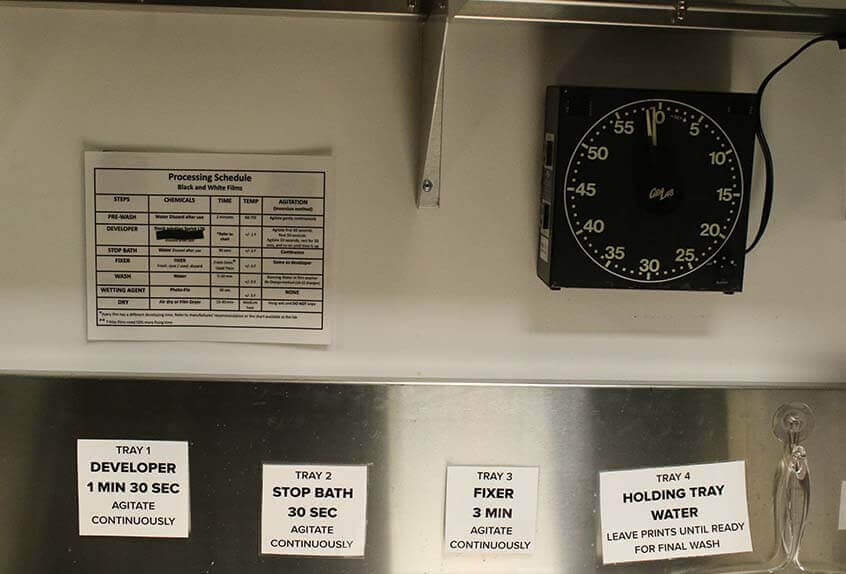
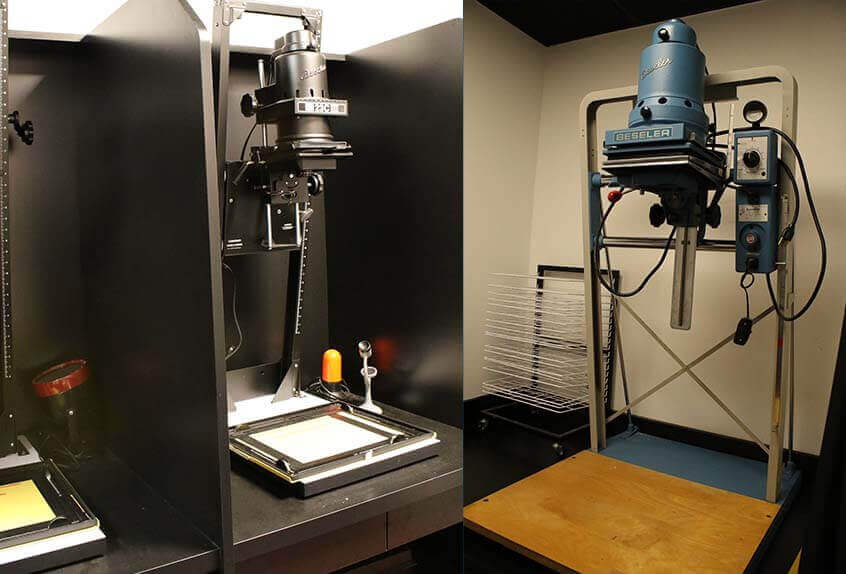
“At my last school, I was teaching more general art classes, which was fun to expand and experiment with different mediums and projects, but the majority of my training and focus has always been in photography,” she said. “When I was looking into the position, I heard about the new darkroom they were building. I had dreams of building a darkroom at previous schools, but due to lack of space and resources, it never materialized. There are only a handful of high schools that I know of in NYC that have darkrooms. Building and investing in new darkrooms is virtually unheard of these days. I want to give a huge shout out and thanks to the Marrus family, Poly’s former photography teacher Adina Scherer, Chief Information and Technology Officer Charles Polizano P’18, the Charles and Valerie Diker Chair of Visual Arts Laura Beiles Coppola ’95, P’29, and Head of Facility Management and Capital Projects Matt Stelluto, who each made major contributions to making the darkroom a reality.”
A Fresh Start, a Fresh Space
Now that the darkroom is a reality, the Advanced Photography class has an entirely new syllabus, as the students step into a darkroom for the first time.
“We’re breaking it down step by step,” said Alexis. “The first month we practiced loading film into cameras, getting film onto reels to process, and hand-developing film. Now they’re learning to make contact sheets and prints in the darkroom. Once they get comfortable with that, we will explore creative practices, like negative sandwiches, painting with developer, and experimenting with sepia and selenium toning.”
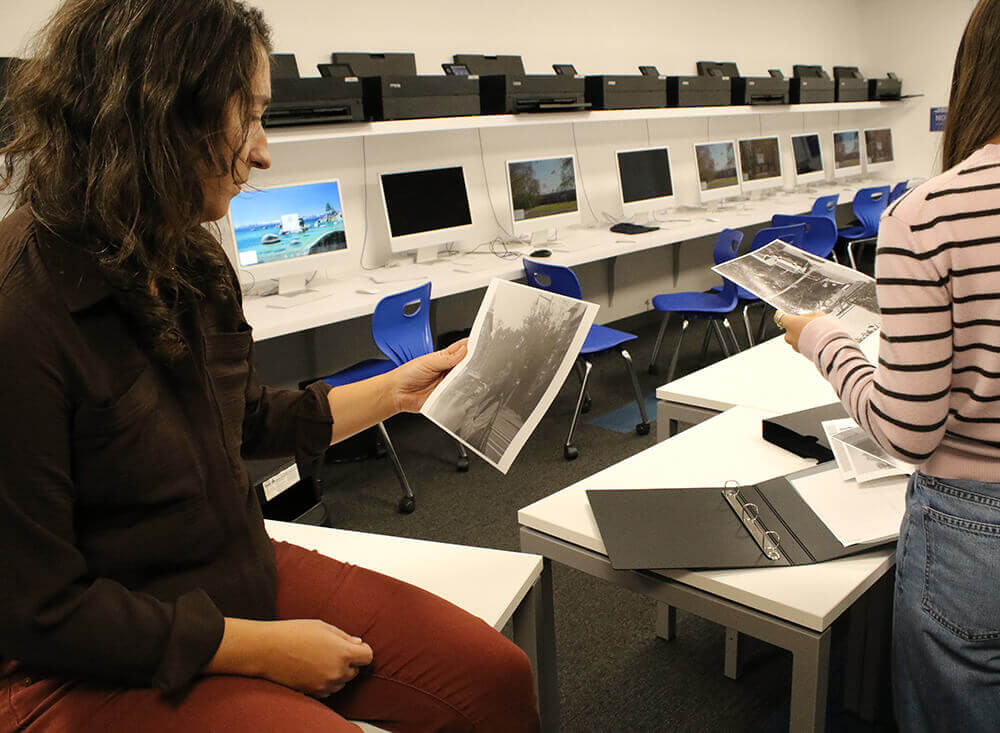
The students have been given a lot of creative freedom this fall, but there’s another aspect to the curriculum that’s new: critiques from their classmates. The class has a photography critique protocol, adopted to help make the work stronger, and emphasizing talking about the photograph, not the person who made it.
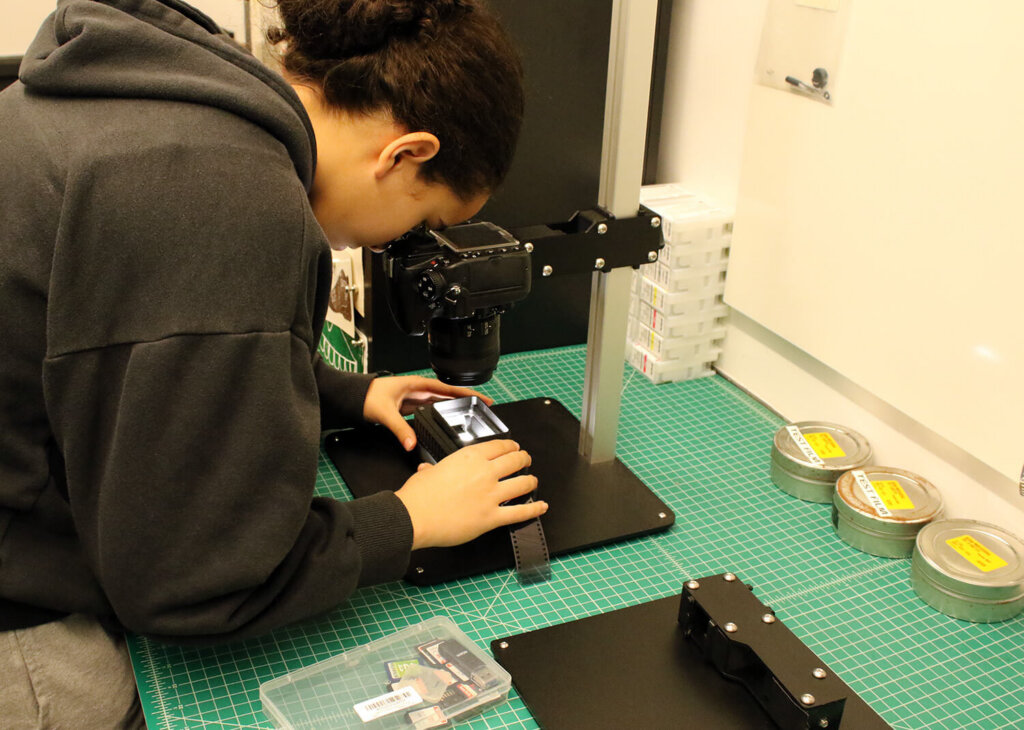
“Alongside the technical aspects, students have intentionally broad projects to help focus their shooting while giving them lots of creative freedom,” Alexis said. “We just completed The Familiar, where students explored with their cameras the people, places, and things that are most familiar to them. I was really impressed with their ability to find beauty and light in the everyday. And each project culminates with a formal critique with physical prints.”
Developing Something New
As Alexis gets to know the Poly Prep community, she’s excited to bring more artists into the class, and expand what her students see and experiment with. The class has an upcoming field trip to see the Gordon Parks: Voices in the Mirror exhibit at the Jack Shaiman Gallery, where the curator will be giving them a tour. And she wants to get their work out to a wider audience.
“I’ve been working with The Polygon and The Blue and The Gray to coordinate getting more student photography into both publications,” said Alexis. “Down the line, I would love to be able to offer more alternative processes, like wet plate collodion and platinum palladium printing. A parent reached out recently to connect me to a photographer that we’re hoping will come do an artist talk. I also hope to bring more photographers into the classroom to share their work, technical skills, and give feedback to students on their portfolios.”
From student publications to visiting artists, Alexis’s vision reaches well beyond the classroom walls. And her goals for the students begin with a space built to support them. As the Marrus Family Media Lab and Darkroom opens its doors, Alexis is ready to guide students through the medium she loves. The Polygon has already profiled Alexis, and Beiles Coppola summed up her impact well:
“Alexis’ expertise and passion for teaching and photography were just what Poly’s Art Department and Poly at large really needed.”
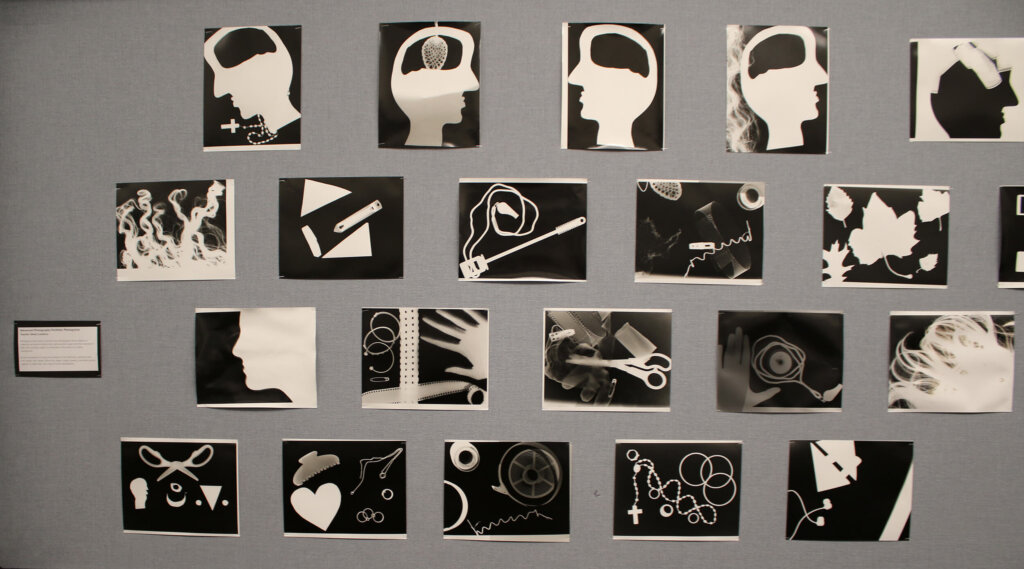
Photogram Project