News
02/6/2026
From the Classroom to Climate Frontlines
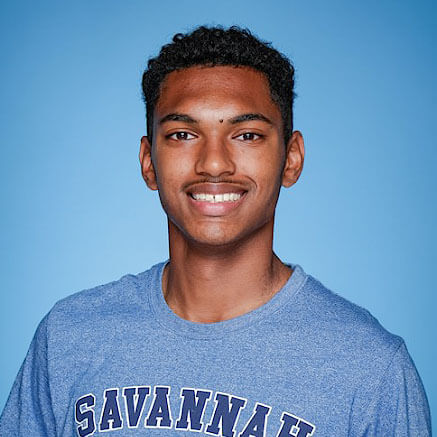
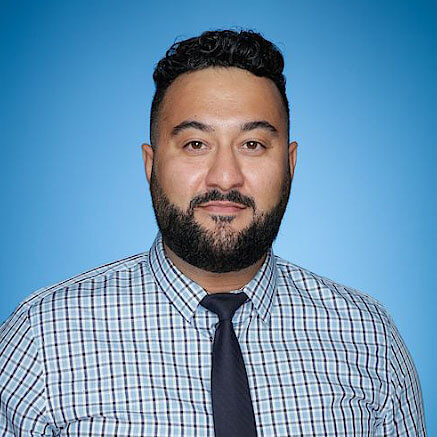
By Brandon Willabus ’27
I did not begin my academic journey at Poly Prep with a great understanding of what climate justice means, or with thoughts of one day interviewing the head of state in my family’s homeland of Guyana.
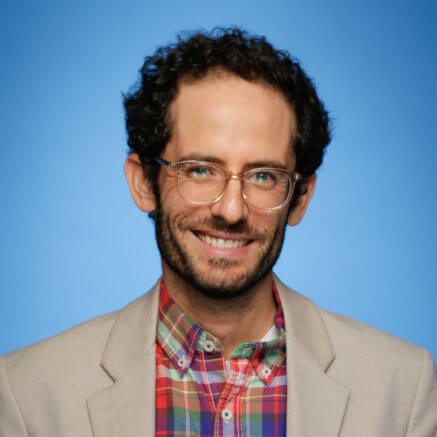
It began, as it does for every Poly Upper School student, in Grade 9 Atlantic World History, where we listened to Dr. [Max] Shmookler explain the intricacies of international trade and the amalgamation of cultures. Laying the foundation for understanding how the modern world was molded through empire, trade, migration, and power, I found myself immersed in a mixture of languages, cultures, and conflicts. At the time, I did not know exactly where those lessons would lead, but I knew then that my fascination for understanding lived experiences would drive future academic pursuits. I quickly realized that Poly’s history curriculum was designed not as a straight line, but as an open framework, encouraging exploration beyond its required coursework.
Learning to Think Critically About Systems in History
Studying the Atlantic World’s colonial systems, forced labor, and global trade exposed me to how extraction and inequality are ingrained within global systems. That foundation carried directly into Grade 10, where Ideologies of the 20th Century World pushed me to examine how those earlier power structures evolved into modern political and economic systems. These formative experiences emphasized questioning dominant narratives and analyzing how ideology continues to shape nations long after formal colonial rule ends.
It was this, paired with the freedom to pursue electives of my choosing, that my personal interest in researching Guyana began to develop. Of course, my family heritage interested me, but it was my experiences in history classes that allowed personal curiosity to evolve into academic inquiry. In the spring of Grade 10, I enrolled in the Decolonization in the Age of the Anthropocene World History Seminar, a course that recast how I understood the connection between climate change and decolonization.
Examining Climate Change Complexity with Historical Lens
Rather than treating climate change as a purely scientific issue, the class framed the Anthropocene period as inseparable from colonial legacies and capitalist motivations. I heard that the class was loaded with challenging topics, leading me to worry about the departure from the previous structure that I’d become familiar with. I felt unsure how to approach this complexity. However, a diversity of sources, such as readings, podcasts, and film excerpts, made the class more vibrant and offered me clarity.
I vividly remember the story of Andrée Blouin, a political activist and writer from the Central African Republic (CAR), a woman integral to the fight for independence across Africa. Investigating trailblazers such as Blouin transformed my interest, culminating in an in-depth research presentation on Guyana. I studied how a postcolonial nation with vast rainforests and a low historical carbon footprint is now navigating the pressures of becoming a major oil producer.
Abstract Concepts and Connections
Abstract concepts, such as neocolonialism, resource sovereignty, and sustainable development, became tangible as I examined Guyana’s policies and global role. Moreover, reading articles and listening to narratives, I unearthed the striking humanity behind the dense archival sources available. For instance, the struggle to ensure voting legitimacy in the nascent democracy proved a difficult but admirable task, reflecting a commitment to calls for equal representation following longtime colonial oppression. Drawing connections between textbook paragraphs and lived experience, these ideas furthered my desire to observe how modern society is shaped by historical movements.
That work carried into this year, when my Grade 11 coursework shifted toward governance, law, and civic responsibility. I elected to double up in history. This past fall I took The Enlightenment as my History Seminar. I was drawn to its focus on the philosophical foundations of democracy, tracing the origins of legal systems, individual rights, and the rule of law. I also enrolled in American History & Civics, which complemented The Enlightenment by focusing on democratic institutions, constitutional principles, and the role of accountability in government. The classes proved challenging, however, a combination of peer collaboration and personal passion motivated me to push through. Examining both past and present norms, I found various issues that humanity continues to reckon with. Then, these courses sharpened my ability to evaluate whether modern development strategies uphold democratic ideals or risk reproducing older forms of domination under new frameworks.
Meeting with the President of Guyana
This foundation continued to pique my curiosity and I wanted to dive deeper. It led me to strive for an audience with the President of Guyana, seeking the intersection of history and modern policy approaches. My mother’s unique connections afforded me the opportunity to eventually realize this goal. Thus, it was during November of 2025 that I conducted an interview with President Dr. Mohamed Irfaan Ali.
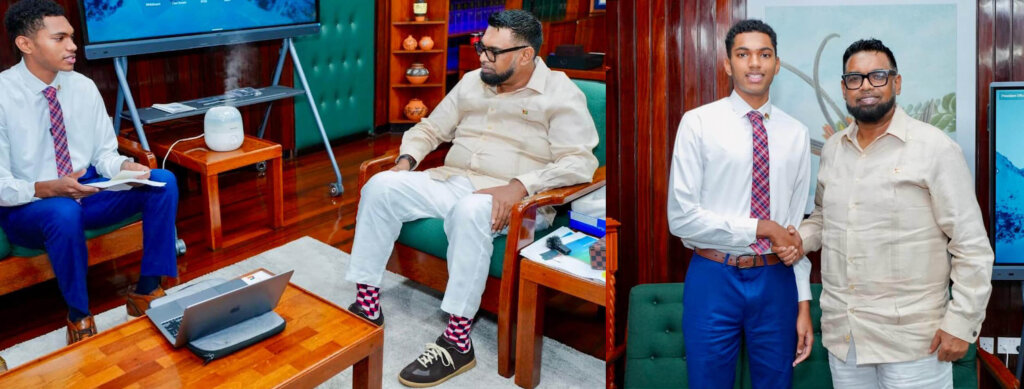
Speaking with a head of state felt like a natural extension of my coursework. Nonetheless, a feeling of apprehension persisted. As I was led down the winding hall toward the president’s office, I felt the daunting reality begin to sink in. Upon entering the room, whether a momentary concern or the relentless Caribbean heat, I felt my palms grow sweaty. However, the questions I asked, pertaining to climate justice, fossil fuel extraction, and governance, were shaped directly by what I had learned across multiple years at Poly. Working alongside The Polygon staff, I was able to share my conclusions in a news article in January. The interview became a moment of academic convergence, as historical foundations from Grade 9, critical global analysis from Grade 10’s Decolonization seminar, and legal and civic frameworks from Grade 11 courses collectively informed my approach to a nation’s decolonial struggle—in a real and palpable way.
Broadening My Academic Path
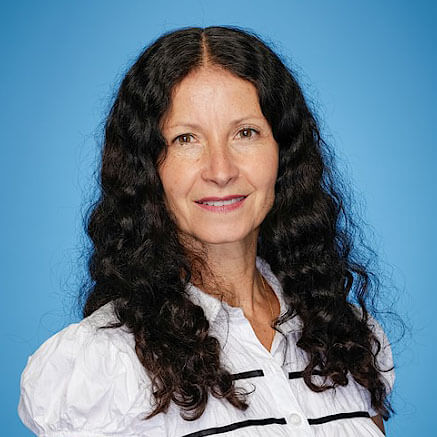
Poly’s curriculum has encouraged this learning to extend beyond history, cultivating an interdisciplinary approach to these conversations. In Español IVA-H, Dilemas Globales, an Advanced Spanish language course taught by Profe Maité [Iracheta], discussions of Indigenous rights and environmental justice in the context of COP30 in Belém reinforced many of the questions I was exploring in my historical research.
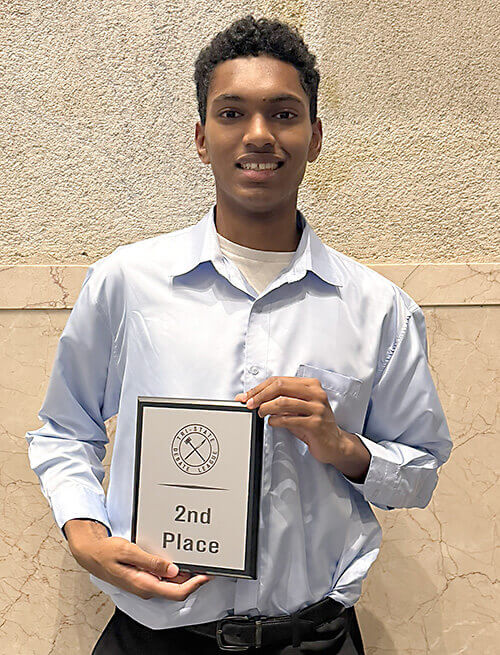
At the same time, extracurriculars such as Model United Nations and Policy Debate allow me to test the viability of climate partnerships and indigenous activism in collaborative, real-world settings. Through Model UN, I engage with sustainable development and international cooperation, while Policy Debate strengthens my ability to analyze evidence, challenge assumptions, and articulate ethical arguments. As a new debater this year, Mr. [Sohail]Jouya and the team have been instrumental in helping me achieve various milestones, epitomizing the supportive Poly community. These interdisciplinary and extracurricular experiences complemented my coursework, underpinning Poly’s emphasis on connection, application, and critical engagement that shapes the next generation of global citizens.
Academic Exploration and Independence
What my journey reflects is not a singular, prescribed path, but one of many possible routes Poly students can take. The structure of our school’s history program, progressing from foundational global courses to seminars and electives, creates space for students to follow their interests wherever they may lead.
Looking back, Poly has offered more than a sequence of courses; it offers a curriculum designed to grow with me. It values curiosity, supporting independence, and trusting students to engage with complexity. From my first exposure to global systems in Atlantic World History to drawing connections to my family’s heritage to interviewing a world leader through my advanced coursework, I learned that meaningful inquiry occurs when personal interest and academic structure intersect. As I look ahead to pursue a career in international affairs, I have no doubt that my experiences here will continue to guide how I approach global relations, climate justice, and responsible leadership long after I leave Poly.

Brandon Willabus ’27 is active in numerous areas of student life at Poly Prep. This year, he is a Blue Key Leader, peer tutoring coordinator, an award-winning member of the Policy Debate team, Vice President of Model UN, a member of Advanced String Ensemble, Umoja Males, and the Assistant Head of Civics on the Student Service Board. He is also a proud member of both Boys’ Varsity Soccer and Boys’ Varsity Basketball, and was a contributing writer for the Spring/Summer 2025 “Change Issue” of Poly’s school magazine, The Blue & The Gray. Outside of school, he enjoys supporting Manchester United and the Brooklyn Nets, playing The New York Times games, and learning new languages. His drive to dive deeply into his interests and discover new perspectives embodies the multifaceted Poly student.